How to Catch Redfish
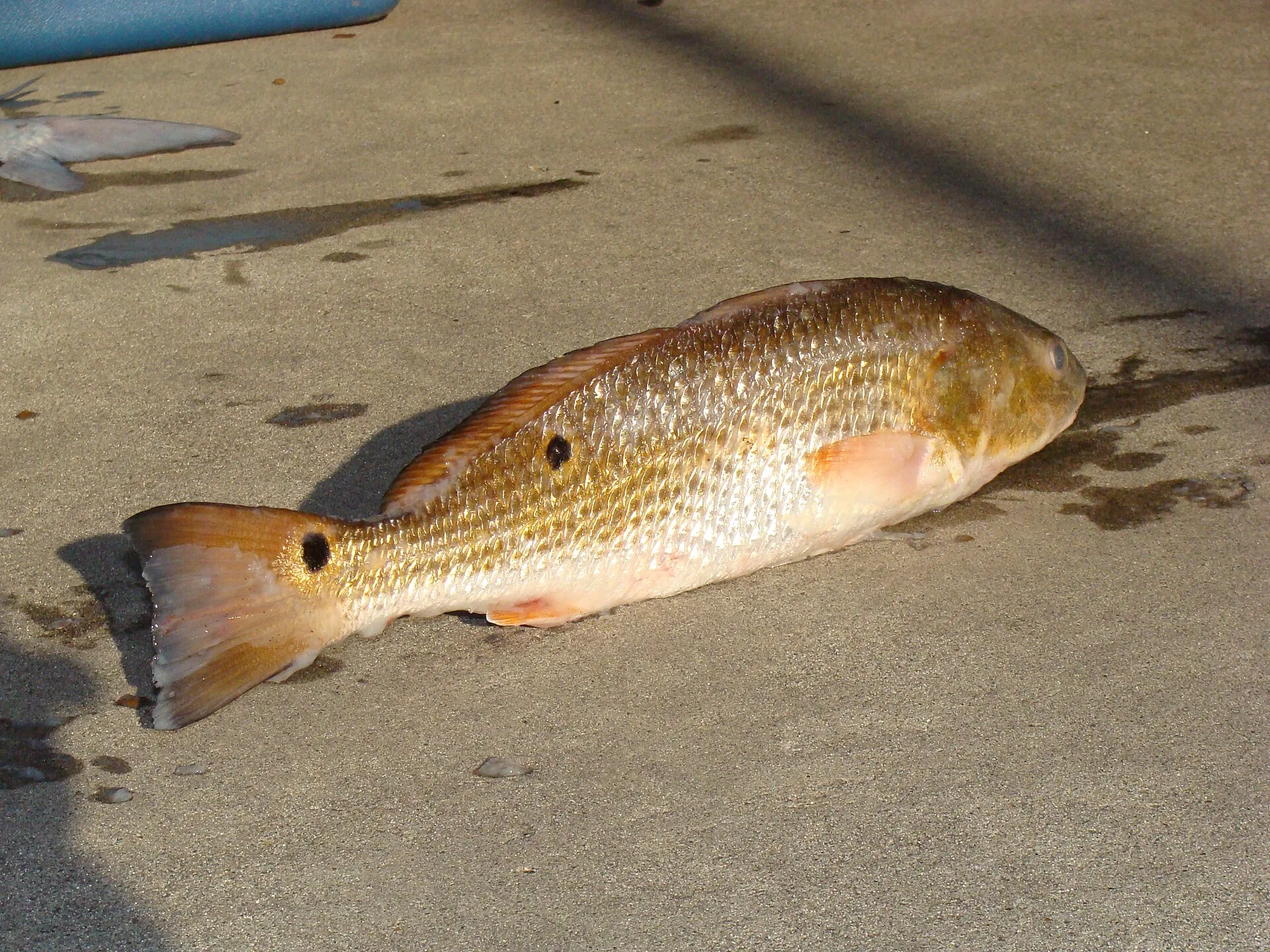
The first time a redfish tail waves at you above the grass, you forget to breathe. A flood tide pushes a foot of water over a marsh flat that was bare mud an hour earlier, and the fish slide in to root for fiddler crabs. They tip nose-down to dig, and that copper, black-spotted tail breaks the surface and waggles in the air. That is the tailing redfish, and it is why inshore anglers fall harder for this fish than almost any other.
Red drum live shallow and they show themselves. You are not watching a bobber over deep water. You are stalking a visible fish in twelve inches of water, and when an eight-pounder eats your bait two rod-lengths away, it spoils you for most other fishing.
Tide and clarity run the whole show
Redfish feeding is a tide story. Moving water flushes crabs and shrimp out of the grass and off the oyster, and the reds follow the food. On a flood tide they push up onto flats they cannot reach at low water, and the tailing happens on the higher stages, deepest on the big spring tides around the new and full moon. The same moon phases that swing the tide also decide how far the water climbs into the marsh. Slack tide, top or bottom, usually shuts the bite off. Fish the push.
Oyster bars and grass lines are the other half of it. Reds patrol the up-current edge of a bar and ambush whatever the current sweeps past, so fish the side the water is running onto. Creek mouths and the little drains that empty a marsh on a falling tide are choke points, and on the last of the fall the fish stack there waiting for the buffet to wash out.
Clarity decides which game you can play. Clear water over a light sand or shell flat is the sight game: you hunt tails, wakes, and the push of a moving fish. In muddy or wind-churned water you cannot see them, so you fish blind to structure and lean on scent.
You do not need a flats boat
This is the myth that keeps people off the water. You do not need a poling skiff to catch redfish. Reds feed in water so skinny their backs are exposed, and a boat in that depth is a liability, since the hull slap and the pushed wake send fish bolting.
Wading is often better. You move slow, you stay low, and you get close and quiet. Keep the sun behind you so you can see into the water, and watch for nervous bait and pushes, not just tails. From the bank, a dock, or a jetty you fish the same logic: cast cut bait into a creek mouth or a drain on a falling tide and let the current carry the scent. Plenty of the biggest reds caught every year never see a boat. The red drum profile breaks down where they sit by season.
Spoons, soft plastics, and a chunk of cut bait
Three things cover almost everything.
The gold spoon is the icon for a reason. A half-ounce weedless gold spoon flashes like a fleeing crab or baitfish and throws off a vibration that reds home in on in stained water. Reel it slow and steady, just ticking the grass tops. Weedless means you can drag it through cover that would foul anything else.
Soft plastics are the everyday tool. A paddletail or a shrimp imitation on a light 1/8 to 1/4 oz jig head, slow-rolled over a flat or twitched along an oyster edge. Over grass, hang a scented shrimp under a popping cork and chug it. The noise mimics feeding fish and keeps the bait hanging right at their level. Match the size to the local shrimp and mullet.
Cut bait is the great equalizer, and it is how you fool the biggest fish. A chunk of mullet, menhaden, or blue crab on a fish-finder rig, pinned to the bottom at a creek mouth or in the surf. Reds hunt by smell as much as by sight, so cut bait works when the water is dirty, the light is flat, or it is full dark, which is exactly when the visual game falls apart.
The fall bull run
In fall, roughly September through November, the big mature bull reds school up near inlets, passes, beaches, and jetties to spawn. These are not the slot fish of the marsh. They run from the high twenties of inches to forty-plus, twenty to forty pounds, and they are the trophy season. Fish big cut bait on heavy gear, on the bottom near a pass on a moving tide, or sight-cast the schools cruising a clean-water beach.
Be honest with yourself about the conditions. Sight-fishing needs clear-ish water, decent overhead light, and low wind to pick out tails and pushes. A stiff chop and muddy water kill it, and you switch to cut bait. Weather and water stack the odds and tell you which game to play, but they do not place the fish on the flat for you. A look at the wind and sky and a tide chart before you leave is worth more than one more lure in the box.
Napp does that first read for you. It pulls the live weather at the water nearest you, ranks how likely each species, red drum included, is to be biting right now, and shows the reasoning behind the call, free and with no login, at napp.fish. Scan the spots across your region and the conditions before you drive, then go find a tail waving over the grass.
Photos: Geeklikepi, CC BY-SA 3.0