Fall Fishing Guide: The Autumn Feed
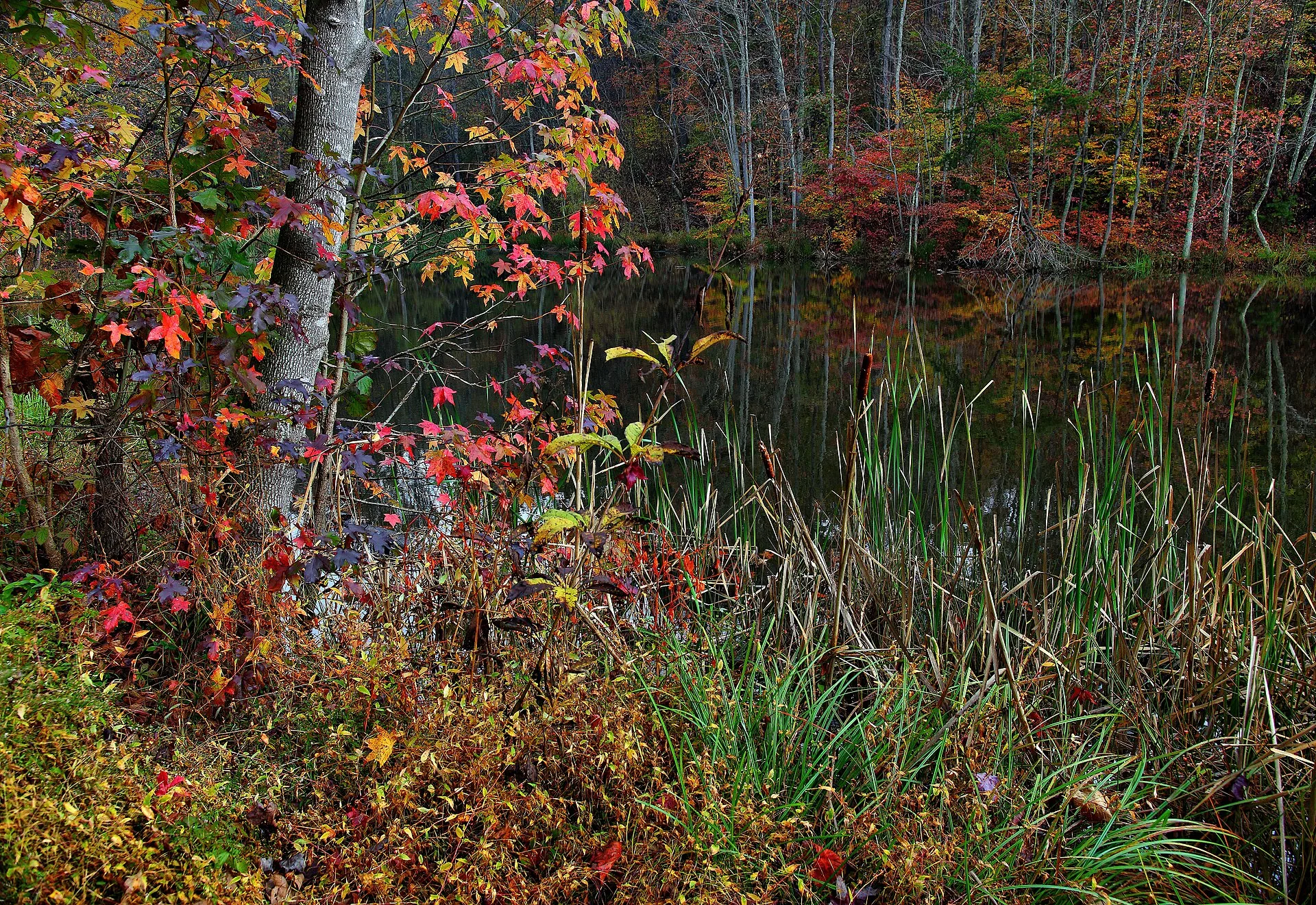
Predators feed in fall like they know winter is coming. Because they do.
Through the autumn cooldown a pike, a walleye, or a big bass is not just topping off. It is gorging. Shorter days and dropping water tell the fish that the lean months are close, and it answers by eating everything it can catch while the catching is still easy. This is the season when the biggest fish in the system make the most mistakes. Your only job is to be there when they do.
Find the bait and you have found the fish
If you remember one thing about fall, make it this: find the bait, find the fish. It is the single rule of the season, and in autumn it is almost mechanical.
As the surface cools back down through the comfortable range, the baitfish that scattered across the whole lake all summer pull together into tight schools and slide shallow. They stack into creek arms, the backs of bays, and the mouths of any feeder creek pushing slightly warmer, food-rich water. The predators follow them in and set up on the edges. Pike, muskie, walleye, and bass all run the same play, shadowing the schools and slashing through them at first and last light.
This is the cooling half of the temperature curve doing the work. A bass that sulked through 80°F (27°C) August water comes alive again at 60°F (16°C), and a pike or walleye that hid deep all summer can hunt the shallows in comfort. If you want the mechanism behind it, the water temperature piece lays out where each species feeds hardest. In fall, that comfortable band slides back over the shallow water where the bait already is. Everything lines up at once.
So stop fishing memories. The midsummer spots go quiet. Idle the bank, watch for flickering bait, diving birds, or nervous water in the creek arms, and start where the food is.
The turnover trap
Fall is not a straight line up, and one thing can flatten a lake for a week or two: turnover.
Through summer a deep lake sits in layers, warm on top and cold below. When the surface finally cools enough to match the depths, the whole column mixes and rolls over. For a few days to a couple of weeks the water turns into a uniform, slightly murky soup, often with a faint sulfur smell and bits of debris hanging in it. The fish scatter through the entire column, the bite gets ugly, and a lake that produced on Tuesday can feel stone dead on Saturday.
Be honest with yourself about what conditions actually do. They tip the odds, they do not pin the fish to a spot. A lake mid-turnover has had the odds tipped hard against you, and no amount of grinding fixes that. The smart move is to leave. Fish a river instead, since moving water does not stratify and does not turn over, or drive to a shallower lake that flipped weeks ago and has already settled. Give the turned lake ten days and it often comes back better than it was.
Match the gorge with a bigger meal
A fish eating for winter is not interested in a snack. This is the time of year to size up.
A big fall pike will happily eat a baitfish a third of its own length, and a muskie hunts prey even larger in proportion. Throw the bigger glide bait, the larger swimbait, the full-size soft jerkbait. A 7 inch lure that felt absurd in July is exactly right in October. If you are hunting the apex predator, the muskie guide covers the oversized profiles that earn cold-water strikes.
This is also why fall is trophy season, plainly. The heaviest fish of the year, the deep-bodied females, are feeding hardest and carrying their most weight. If you get one realistic shot at a personal best, it is the six or so weeks of the autumn feed.
The window shrinks as it gets cold
Early fall fishes long and generous. Late fall does not.
Once the water drops into the 40s°F (about 4 to 9°C), the all-day bite collapses into a short, intense midday window. The few hours when a weak sun has nudged the shallows up a degree or two, roughly noon to 4 pm, is when cold-water fish do most of their feeding. It is a clean inversion of summer, when you fished dawn and dusk to dodge the heat. Now you sleep in, fish the warm middle of the day hard, and expect action in bursts rather than a steady pick. Walleye are the exception that still rewards the low-light and after-dark angler, and the walleye guide gets into those dim-light habits.
That is the whole arc of fall. Find the bait, respect the turnover, throw something bigger, and as the cold sets in, fish the narrow warm window in the middle of the day.
Conditions decide whether the fish are feeding and roughly where, and that is exactly the read napp gives you. It pulls the live weather and the estimated water temperature at the water nearest you, ranks how likely each species is to be biting right now, and shows the reasoning behind every call, so you know whether the autumn feed is on before you load the truck. It is free, there is no login, and you can check your home water or browse by region to find where the cooldown is firing first.
Photos: ForestWander, CC BY-SA 3.0 us