Solunar Theory: Does It Actually Work

There is a printed solunar table taped to the wall of half the bait shops I have ever walked into, and plenty of anglers plan their week around it. The pitch is tidy. Fish feed hardest during moon-driven major and minor periods, so fish those windows and skip the rest. It is a great story. It is also oversold, and treating it as gospel costs you water time.
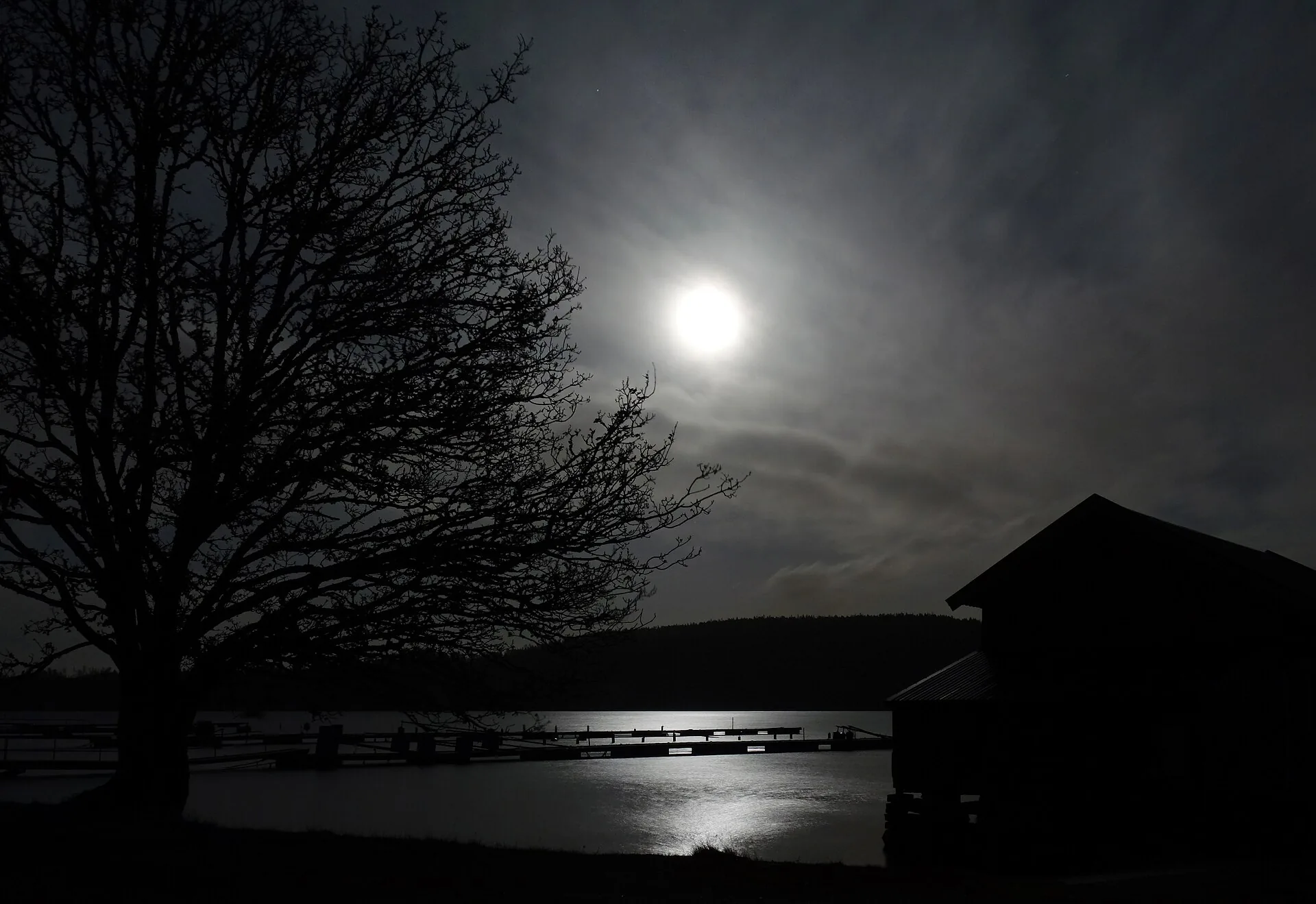
Here is the mechanism the whole thing rests on. A major period is the moon directly overhead or directly underfoot, on the far side of the earth. A minor period is moonrise and moonset. The claim is that the moon's pull, at its felt-strongest in those four moments, nudges fish into feeding. Two majors and two minors a day, each running roughly an hour or two, and those are supposedly your prime times.
What actually holds up
The solid part has a name, and it is tides. The moon unquestionably drives them. On any tidal water, the coast, an estuary, a tidal river, moving water concentrates bait and switches predators on, and the timing of that movement is locked to the same lunar clock the solunar table runs on. So on salt and brackish water, majors and minors very often land on a tide change or a hard run of current, and the bite genuinely picks up.
But read what is happening underneath. You are not watching the moon feed the fish. You are watching the moon move water, and moving water feeds the fish. The tide does the work and the table just describes it from a distance. That overlap is exactly why solunar feels uncanny to coastal anglers and vague to everyone fishing a pond.
Because on a small inland lake there is no tide worth the name. The moon's direct gravitational tug on a fish sitting in twelve feet of water is real but tiny, far smaller than the pressure change that same fish shrugs off swimming up or down a few feet. The idea that this faint tug flips a feeding switch has been tested for decades, and the rigorous studies are mixed at best, with plenty showing no usable effect once you account for time of day and weather. If solunar worked the way the strong version claims, it would show up cleanly in lake data. It does not.
Treat it as a tiebreaker, not a trump card
So here is how I actually fish it. Solunar is a soft input, a tiebreaker, never a rule. Real conditions outrank it every single time. Light, the pressure trend, water temperature, wind, and the plain fact of dawn and dusk all move the bite harder than the moon's position does. The levers that genuinely pay are the clock and the sky. The best time of day to fish and how weather turns a bite on or off will do more for your catch rate than any printed table.
Where solunar earns its keep is as the deciding vote when the big factors already agree. Picture it. A major period lands right on first light, the sky is heavy with cloud, and the barometer is sliding ahead of an approaching front. That is a window, and you should be standing in it. Just be honest about why: the low dawn light, the cloud, and the falling pressure are carrying the load. The major is the cherry on top, the thing that turns a good window into a slightly better one. Flip the conditions, put that same major at noon under a flat blue-sky high, and the table is worthless. No lunar overhead pass rescues a dead bright afternoon.
The overclaim worth busting
This is also why the most repeated solunar claim is simply wrong. Fish do not feed only during major and minor periods. They feed when food, light, temperature, and safety line up, and that happens at all hours. A hungry bass holding in the shade of a dock at two in the afternoon has not consulted anyone's table.
The moon does matter in another way, through its phase and the night light it throws, which is a related but separate question worth its own read in moon phases and fishing. Hourly position is the weakest version of the moon's influence. Treat it accordingly.
Use solunar the way a disciplined gambler uses a small edge. Stack it on top of conditions that are already in your favour and it tilts the odds a touch further. Lean on it alone, talk yourself out of a grey, falling-barometer dawn because the table called it a slack day, and it will cost you the best fishing of the week.
That is exactly how napp handles it. It shows the solunar major and minor feeding windows for your nearest water right alongside the live weather, the light, and the pressure trend, then ranks how likely each species is to be biting right now, with the reasoning laid out so you can see what is carrying the call and what is just the moon adding a nudge. No login, nothing to buy. Start at napp.fish, or find the water near you on the regions page.
Photos: King of Hearts, CC BY-SA 4.0