Smallmouth Bass River Fishing: Read the Current
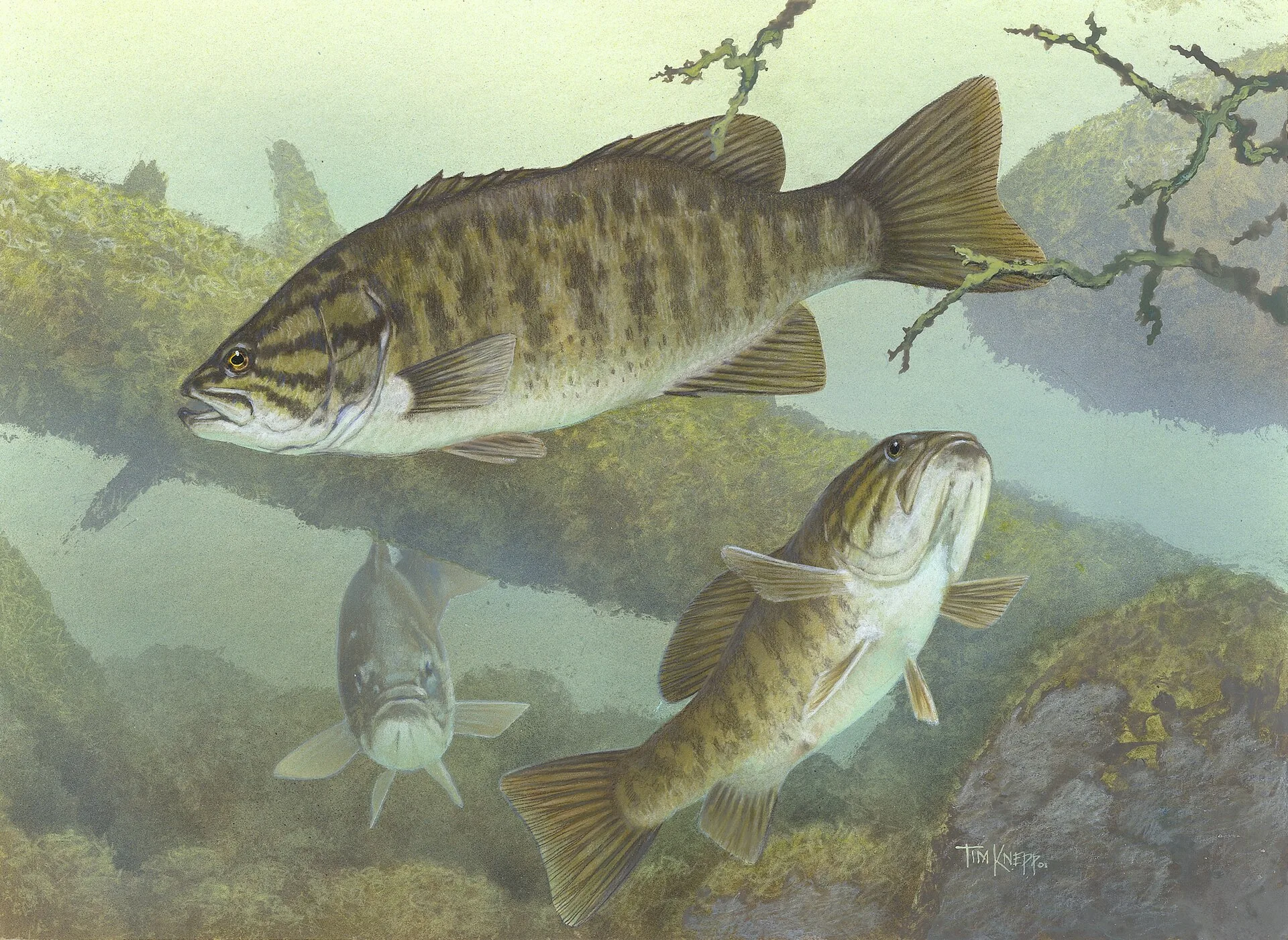
A river smallmouth almost never chases anything through open water. It picks one rock, one seam, one slot of slack current, and waits there, burning almost no energy while the river delivers the food to its mouth. Cast across a hundred feet of empty current and you will feel nothing. Find the one soft patch beside the fast water and you can stand in that spot and catch fish all afternoon.
That is the entire skill of river smallmouth fishing: the ability to look at moving water and see where a fish would actually sit. Get that right and temperature, gear, and timing become detail layered on top.
Where the current makes the decision for you
Water splits speed around anything solid: a boulder, a ledge, a downed tree, a bridge piling. The main flow runs fast and carries plenty of food, but it costs a fish real energy to hold there. Just behind or beside that obstruction the water slows and often folds back on itself, an eddy, sitting right next to the fast lane. A smallmouth parks in that slower water with its nose toward the seam, the line where fast and slow water meet, and darts out to grab a crawfish or baitfish tumbling past before dropping back to rest. Same logic as standing behind a windbreak: shelter from the work, first crack at whatever blows by.
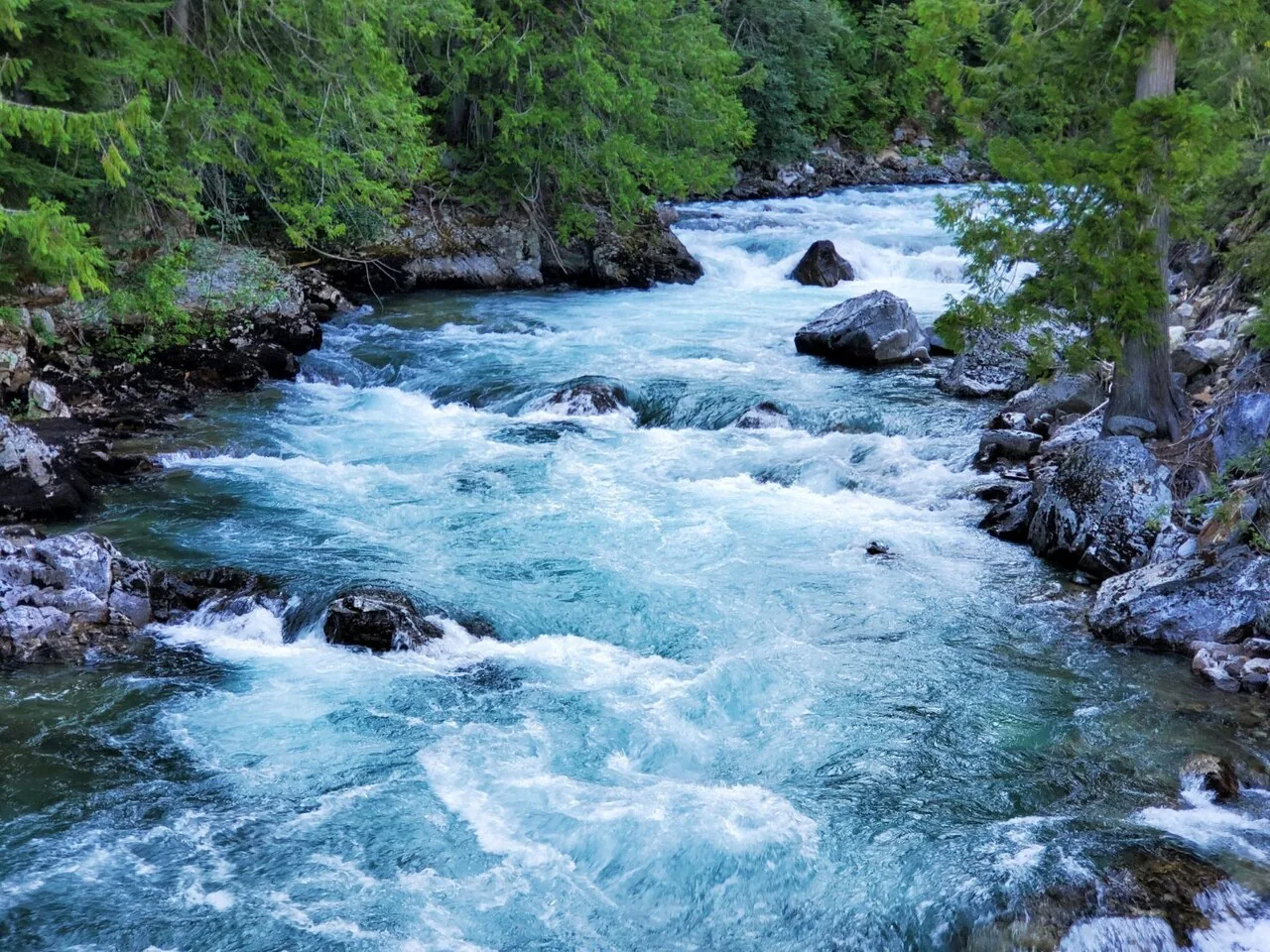
A single mid-river boulder makes the pattern easy to see: a small pillow of dead water ahead of it, a narrow ribbon of fast water wrapping each side, a longer, calmer wake trailing behind. That tailout eddy behind the rock is usually the best of the three, since current funnels drifting food straight into it.
Seams, tongues, and the slack water everyone walks past
Boulders are the obvious break, but rivers hand out plenty of others: bridge pilings, the downstream tip of a gravel bar, the inside of a bend where the bottom drops a foot, the tailout of a riffle where a pool starts to shallow. Anglers walk past that last one constantly, since it just looks like water losing speed.
Light and food supply flip the pattern. In low light, or whenever the water carries plenty of oxygen and drifting food, smallmouth push into the faster current tongue itself to feed, especially over gravel where crawfish live. On bright, low-water afternoons they retreat to the deepest cushion nearby and barely move until the light drops again.
Water temperature sets how hard they hit
Smallmouth run cooler and cleaner than largemouth, and their aggression tracks water temperature closely. Below 50 F (10 C) metabolism drops off and they hold in the deepest pools, feeding rarely, so a bait needs to land almost on their nose and move slowly. As water climbs into the low 60s F (12 to 17 C), fish stage near spawning gravel close to slack current, then spawn around the mid 60s F (about 18 C) in soft water off the main flow, not an exposed flat like lake fish use. Once the river settles into the mid 60s to low 70s F (18 to 23 C), smallmouth are at their most active, holding tight to breaks and hitting hard. Past 80 F (27 C) the fastest, most oxygenated water becomes the most comfortable spot, so fish that spread through slow pools all spring stack into riffles instead.
This is exactly the read napp is built to shortcut. Pull up the nearest river spot and the live water temp estimate does the seasonal math before you rig up, and the ranked list shows what is actually biting now rather than what should be biting in theory.
Fish the seam with gear built for current
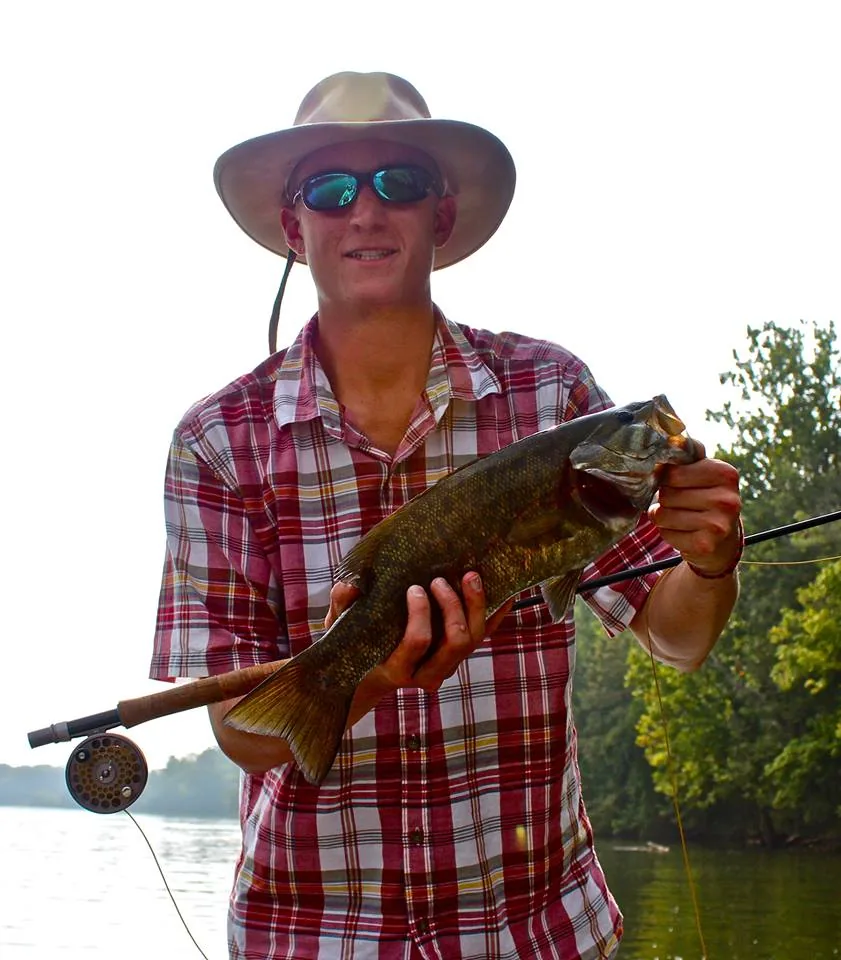
A tube jig, weighted just heavy enough to tumble the bottom instead of sinking straight down, drifts through an eddy the way a real crawfish would. A ned rig does the same job slower and subtler, useful in pressured pools where fish are picky. A crawfish-pattern crankbait bangs off rock, so throw it right into the boulder and let the deflection trigger the strike. An inline spinner, with its flash and vibration, works the current tongues and riffles, cast up and across, then swung down through the seam.
Cast upstream or across the seam and let the bait swing down on its own, the way food actually arrives. Fighting the drift with a fast, straight retrieve is the fastest way to make a good lure look wrong. None of this replaces checking your own local rules before you keep anything. It is simply how river smallmouth behave: they hold current breaks, feed on the current's schedule, and their aggression rises and falls with water temperature more than with anything in a tackle bag.
Check the live water temp, the time of day, and the ranked bite at the nearest river water to you, free and with no login, at napp.fish, or browse river spots near you directly. For the broader ambush logic that drives largemouth too, see how to catch bass.
Photos: Timothy Knepp, U.S. Fish and Wildlife Service, Public domain · NPS Staff, Public domain · vastateparksstaff, CC BY 2.0