
Ice fishing for crappie: how deep, and when
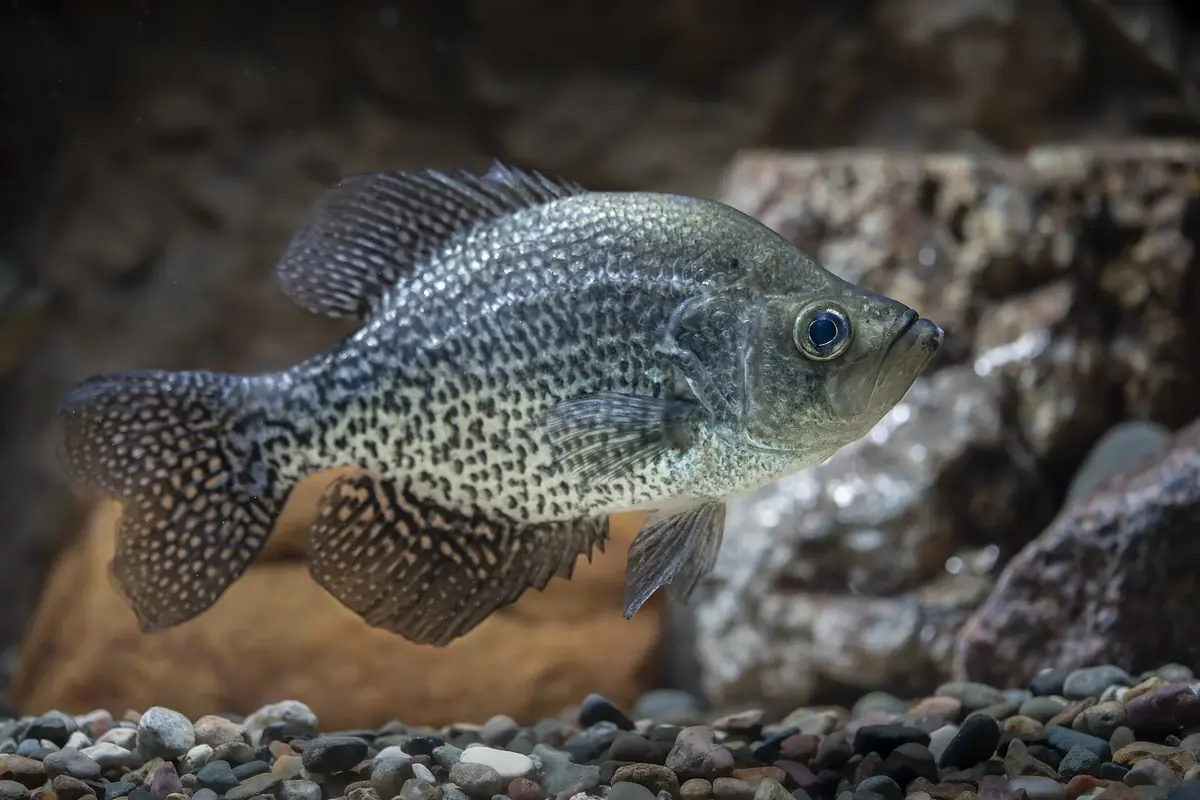
"How deep do you fish for crappie through the ice?" has two answers, and most advice only gives you one. There is the depth of the water under your hole, and there is the depth of the fish in it. Perch and walleye spend much of the winter near bottom. Crappie usually don't. Over 25 feet of water a school might sit 12 feet down, and a jig parked on the bottom will never see it.
Why crappie suspend under the ice
Fresh water is heaviest at 39 F (4 C). Once a lake freezes, that water settles into the deepest basin, while the water just under the ice sits near 32 F (0 C). All winter, the deep hole is the warmest, steadiest water in the lake.
Then there is the food. In many lakes a big share of what black crappie eat in winter is tiny: zooplankton and the larvae of phantom midges. Those animals migrate every day. They hold deep, close to the mud, while the sun is up, and rise toward the ice after dark. Crappie follow them. That is why the school often sits higher at dusk than at noon.
How deep, through the season
At first ice, crappie are often still near the last green weeds, on the edges in roughly 8 to 15 feet of water. Living weed still makes oxygen and holds food.
By midwinter the weeds have died back and the schools move out over the deepest basin, often 20 to 35 feet of water, suspended anywhere from a few feet off the bottom to halfway up. This is when they roam the most.
At late ice, meltwater and stronger light return, and crappie slide toward shallower flats near their spawning bays. One exception: in a shallow, fertile lake under heavy snow, the deep water can run short of oxygen by February, and crappie move up early. If the basin is empty, look shallower.
Find the school, then follow it
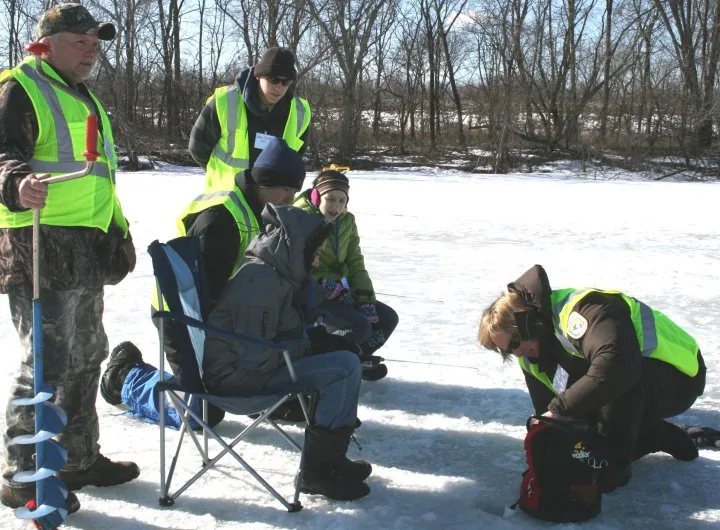
Drill a line of holes across the edge of the basin, all at once, before you fish. An auger is loud and pushes a school off for a while, so make that noise once.
Check each hole with a flasher. Crappie show up as a band of marks off the bottom, and the depth of that band is the number you want. Without electronics, reel a jig up from the bottom a few turns at a time, and when you get a bite, slide a bobber stop to that depth.
Expect the school to move. A group under hole three at 4 pm can be gone by 4:20. When the marks disappear, go hole to hole instead of waiting.
Fish above them, and watch for the up bite
Crappie tend to rise to a bait rather than drop to one. On a flasher, a mark lifts off the band to meet your jig. Set your bait at the top of the school or a foot above it. A bait below the school mostly goes unseen.
The bite itself is often an "up bite." The fish takes the jig from below and keeps rising, so the line goes slack instead of pulling down. A spring bobber or a soft rod tip shows it. Any slack or twitch is worth a short lift.
For bait, a 1/32 or 1/64 ounce tungsten jig with a small plastic or two waxworms covers most days. A crappie minnow hooked lightly under the dorsal fin, on a plain hook below a small float in a second hole, is the classic partner rig (check how many lines your state allows). Use 2 to 4 pound line. If fish come up and look but won't eat, a small flashy spoon pulls them in from farther away; then switch back to the jig and hold it still. Most cold-water bites come during the pause.
The dusk window
If you can only fish one part of the day, fish the last hour of light and the first hour of dark. It lines up with the plankton rise, and crappie, with their big eyes, are built for dim light.
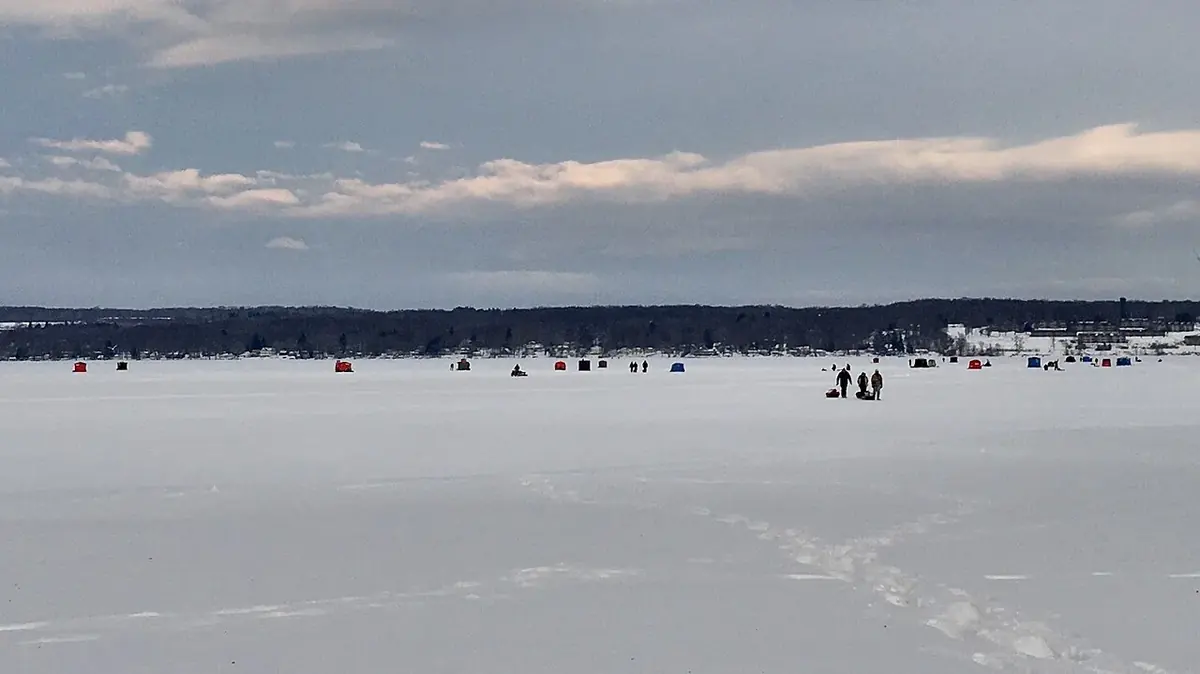
Midday depends on the ice. Clear ice with no snow lets in a lot of light, and the school sits deeper and tighter. A foot of snow dims the water, and crappie can stay higher and bite through the afternoon. Under ice, wind can't touch the water, so the weather that matters most is light: a bluebird day after a cold front still tightens the bite through 10 inches of ice. Pressure gets more blame than it has earned (here is why).
napp helps you plan for that window. A spot's page lists the best times today, in local time at that water, next to the hourly forecast and pressure. Get the holes drilled and the rods set before it opens.
Check the ice first: the ice fishing for beginners guide covers safe thickness and gear.
napp reads the live weather at the waters nearest you and ranks which fish are most likely biting right now, with the reasoning shown. It is guidance, not regulation. Check the conditions and the current bite at your closest lake, free and with no login, at napp.fish.
Photos: USFWS Mountain-Prairie, Public domain · USFWSmidwest, Public domain · Andre Carrotflower, CC BY-SA 4.0


