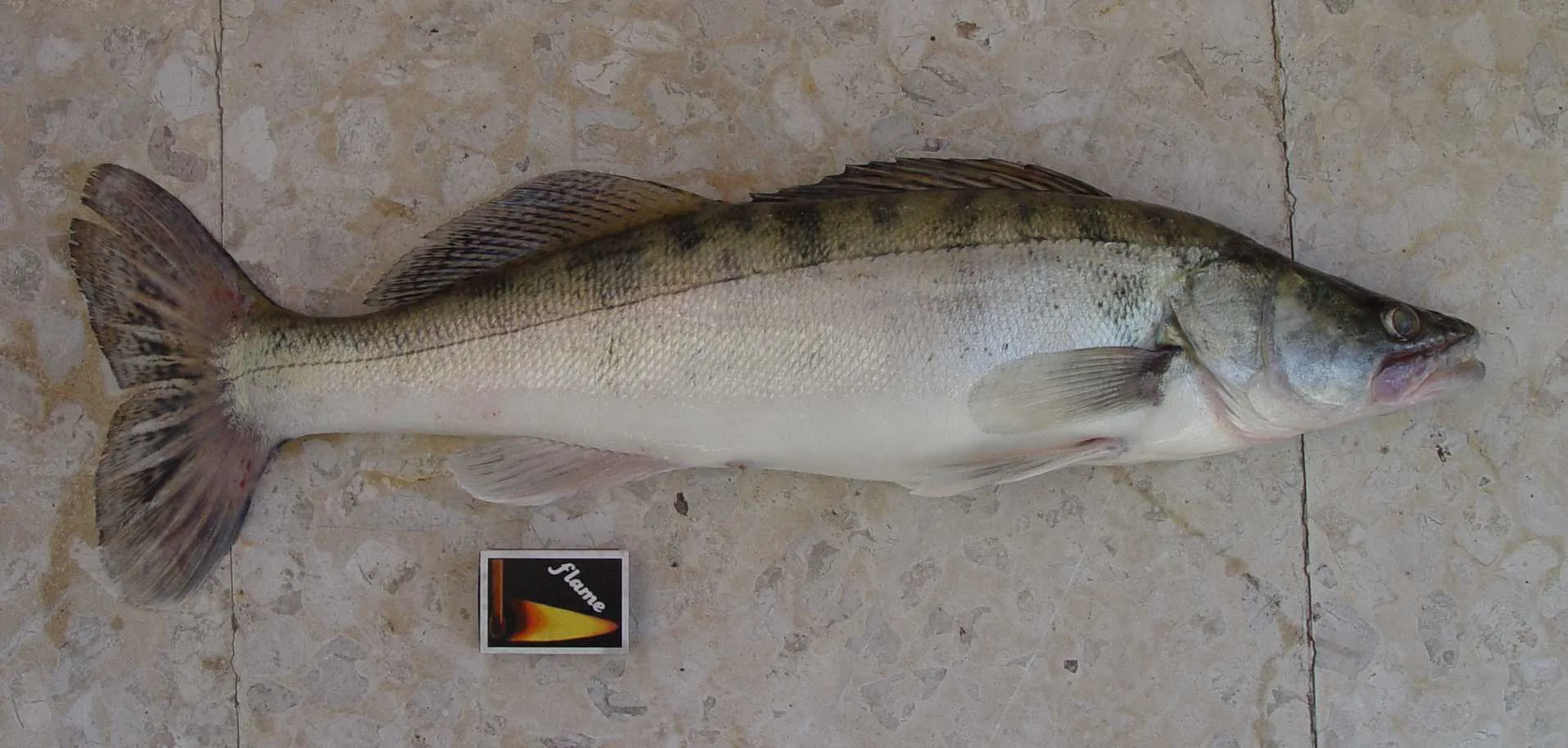
How to catch walleye and zander: the low-light predator and the jig that catches it
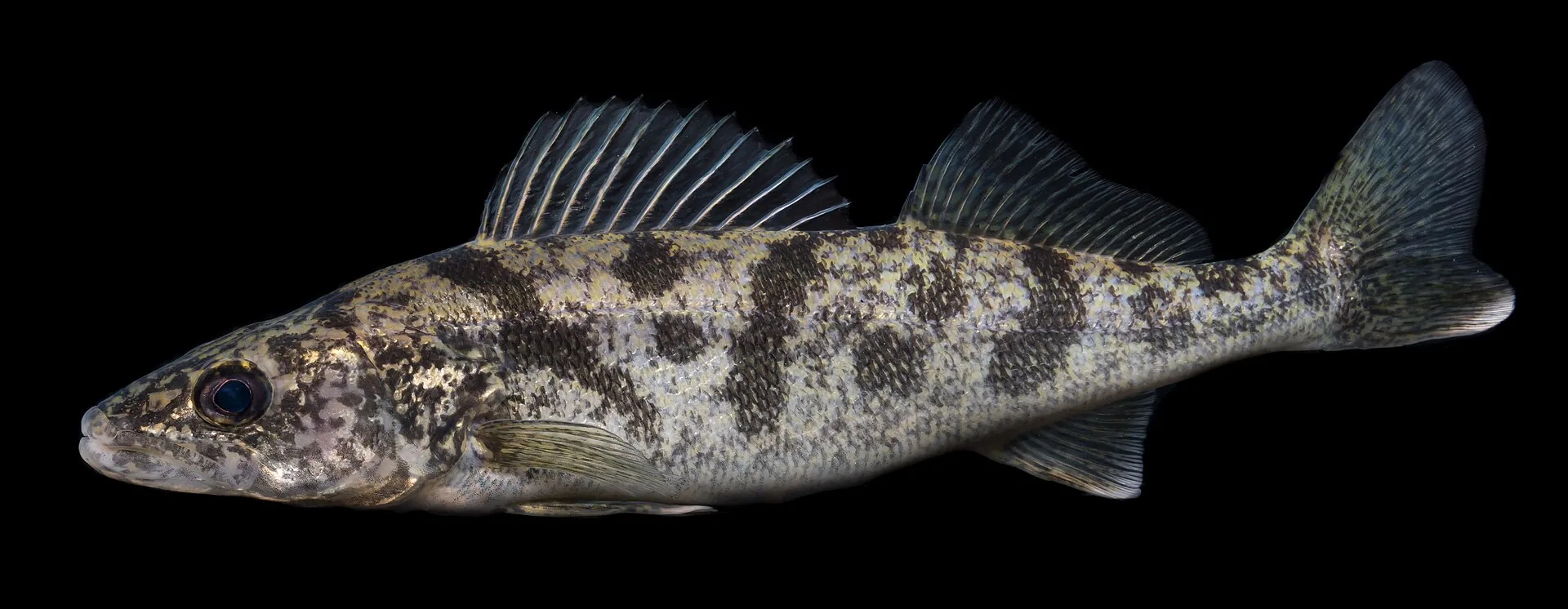
A walleye sees you long before you see it. That eerie glow in its eye is a light-gathering mirror behind the retina called the tapetum lucidum, the same reflective layer that makes a deer's eyes flash in your headlights. It doubles the available light hitting the fish's eye, which means at dawn, at dusk, after dark, and in murky water, a walleye out-sees almost everything it hunts. The same is true of its European cousin, the zander. Understand that one fact and you understand the fish.
Walleye (Sander vitreus) live across North America. Zander (Sander lucioperca) range across Sweden and continental Europe. They are sister species in the same genus, Sander, and they split apart only a few million years ago. They are not identical (zander run more streamlined and tolerate warmer, murkier water), but for an angler trying to put one in the net, the playbook is close enough that I'll treat them as one fish here. Where you read "walleye," a Swedish or European reader can read "zander" and lose almost nothing.
The eye tells you when to fish
Because these fish see so well in dim light, they hold a hunting advantage exactly when their prey is half-blind. That is the whole game. A baitfish at last light cannot see the predator easing up from below. The walleye can see the baitfish just fine.
So the best windows are the low-light ones. The first and last two hours of daylight. The hour after full dark. Heavy overcast. Right after a rain stains the water. The worst window, and I mean genuinely bad, is a bright, calm, high-sun afternoon on clear water. The fish drop deep, tuck under cover, and basically wait for the sun to get out of their eyes. If you only get to fish midday on a bluebird day, fish deeper and slower and lower your expectations, or go find dirtier water.
Wind is your friend, which sounds backward to a lot of new anglers. A stiff wind builds a "walleye chop," choppy windblown water that scatters and cuts the light penetrating the surface. That chop turns a bright afternoon into a feeding window, and it stacks bait against windblown points and shorelines. Calm and slick is pretty. It is rarely better.
Where they live: structure, edges, and the bottom
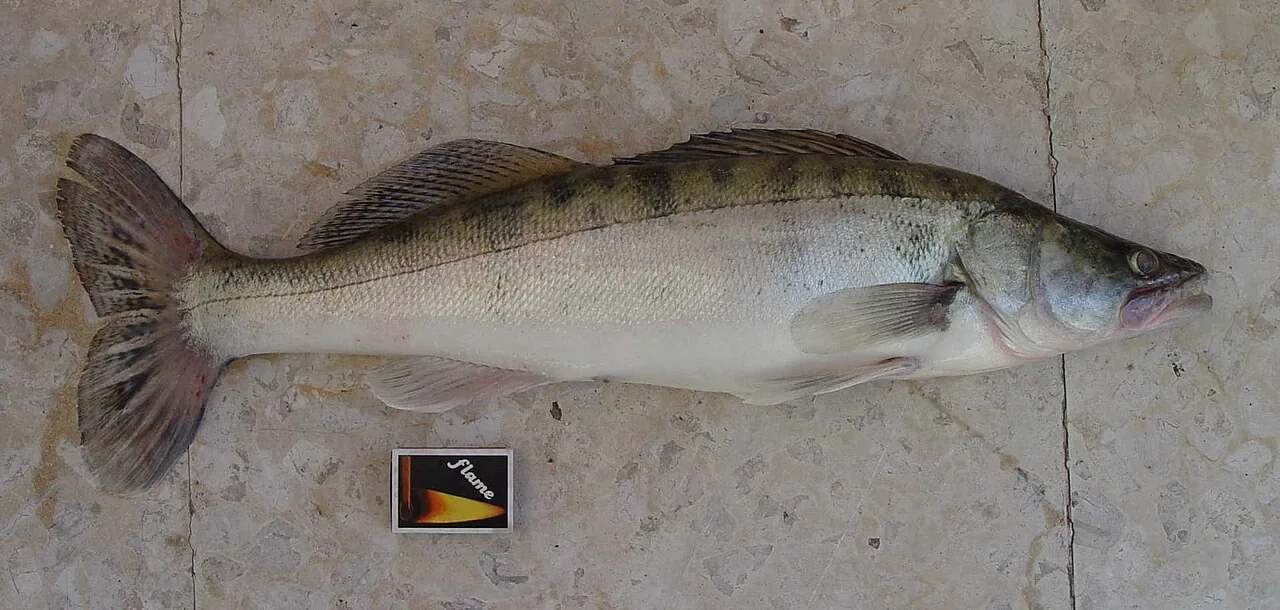
Walleye are not roamers of open featureless water for most of the year. They relate to structure and to edges, and they spend a lot of their lives close to the bottom.
Learn to love the word breakline. That is the edge where shallow drops into deep, and walleye patrol it like a fence line. Points that taper out into a lake. Underwater humps that top out a few feet below the rest of the basin. Gravel and rock bars. Weed edges. In rivers, the seams where fast current meets slack water behind a wing dam, a bridge piling, or the inside of a bend. Find the edge, find the fish.
A useful rule: in clear water they tend to sit deeper and tighter to cover, often 12 to 25 feet (roughly 4 to 8 meters) in summer. In stained or tannic water they will sit shallower because the dim light already protects them. Zander in particular will roam more and suspend off the bottom chasing schooled baitfish, so do not be shocked to mark them up in the water column.
The jig and minnow: the technique that just works
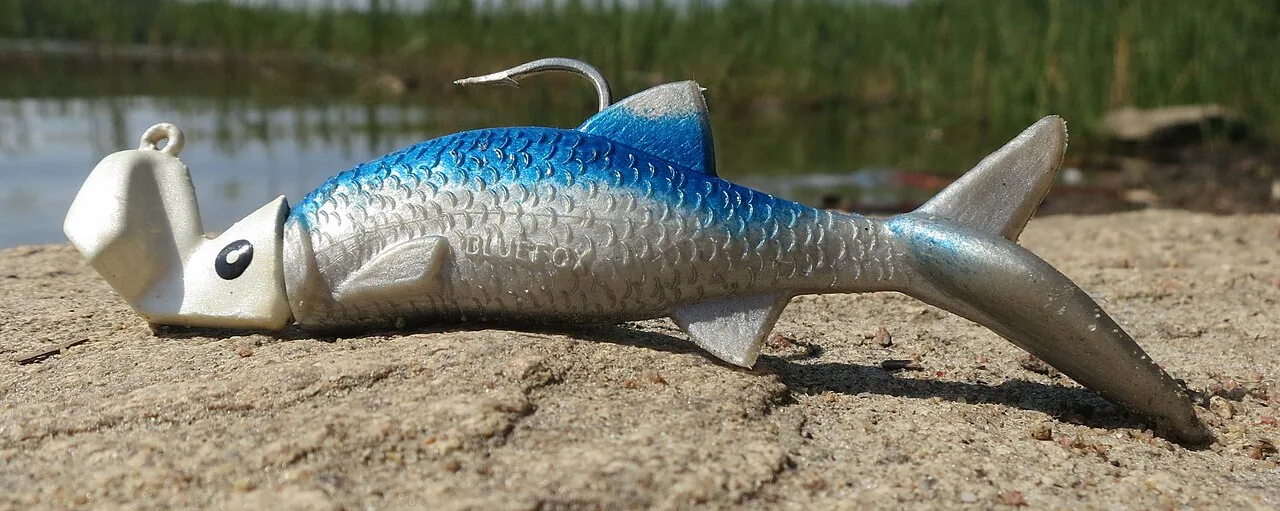
If I could only keep one walleye presentation, it would be a jig. A simple lead-head jig, tipped with either a soft-plastic body or a live minnow, worked slowly along the bottom. It catches more walleye and zander than everything else combined, and it works in spring, summer, and fall.
Weight first, because everyone overthinks it. Use the lightest jig that still lets you feel the bottom. In shallow, calm, post-spawn conditions I'll start as light as 1/16 oz. The everyday range is 1/8 to 3/8 oz (about 3.5 to 10.5 grams). More wind, more depth, or more current means a heavier head so you stay in contact. If you cannot feel the jig tick the bottom, you are fishing too light. If it is plummeting like a rock and you get no bites, go lighter.
The retrieve is almost boring. Let it fall on a tight line and watch the line, because a lot of bites happen on the drop and feel like nothing more than the line going slack or twitching. Lift the rod tip slowly, maybe six to twelve inches, then let the jig glide back down and tap bottom. Lift, drop, pause. The pause matters. Walleye often hit a jig that is sitting still or barely moving. They are not chasing it down. They are inhaling something that looks slow and easy. When you feel weight or mush, reel down and set.
For tipping, a lively minnow (fathead, shiner, or in Europe a small roach) is hard to beat in cold water. Soft plastics shine once the water warms past about 44°F (around 7°C), where a paddletail's thump-and-fall triggers reaction strikes and lets you cover water faster. Match the body to the local baitfish in size, usually 3 to 4 inches.
Color, water clarity, and confidence
Keep this simple. Clear water, match the natural baitfish: silver, white, smelt, perch, natural minnow patterns. Stained or muddy water, go loud: chartreuse, firetiger, orange, glow. The dirtier and darker the water, the more the fish hunts by its lateral line and silhouette, so a bright, high-contrast color helps it find your jig.
A small thing that matters in rocky North American lakes: walleye respond well to a jig that ticks the bottom and even rattles a bit, because that mimics crayfish and fleeing prey. Zander in pressured European canals can be the opposite, preferring a smoother, gliding presentation with less banging around. If aggressive is not working, slow down and quiet down before you change spots.
Finding scattered fish: trolling and slip-bobbers
When the fish are spread out and you do not know where to start, cover water. Two old methods still find them fast.
Troll crankbaits or pull a bottom-bouncer and spinner rig (a "crawler harness") along a depth contour or a long breakline. You are searching, letting the boat present to a lot of fish until you mark a group or get bit. Once you find them, you can stop and pick the spot apart with a jig.
The other method is patience in a high-percentage spot: a slip-bobber rigged with a live minnow or leech, set to hang just above structure or a known rock pile. Slide the bobber stop to the right depth, cast, and let it sit in their face during a low-light feed. It is deadly at dusk over a reef and easy for a beginner to fish well.
A few honest truths
Bright, calm midday is the worst time to chase these fish, and no lure fixes that. Wind and low light are not obstacles, they are the conditions you want. Stay near the bottom, keep your presentation slow, and let the fish's own eyes work against it. Match your color to the water, not to the tackle-shop display. And when you find one walleye on a piece of structure, slow down and work it, because they are rarely alone.
You can see which spots near you have wind and a low-light window lining up right now, and whether walleye or zander are likely biting there today, free and with no login, at napp.fish.
Photos: USFWS Mountain Prairie, Public domain · eLNuko, Public domain · R. Henrik Nilsson, CC BY 4.0