How to catch pike: where they hold, what triggers them, and the lures that work
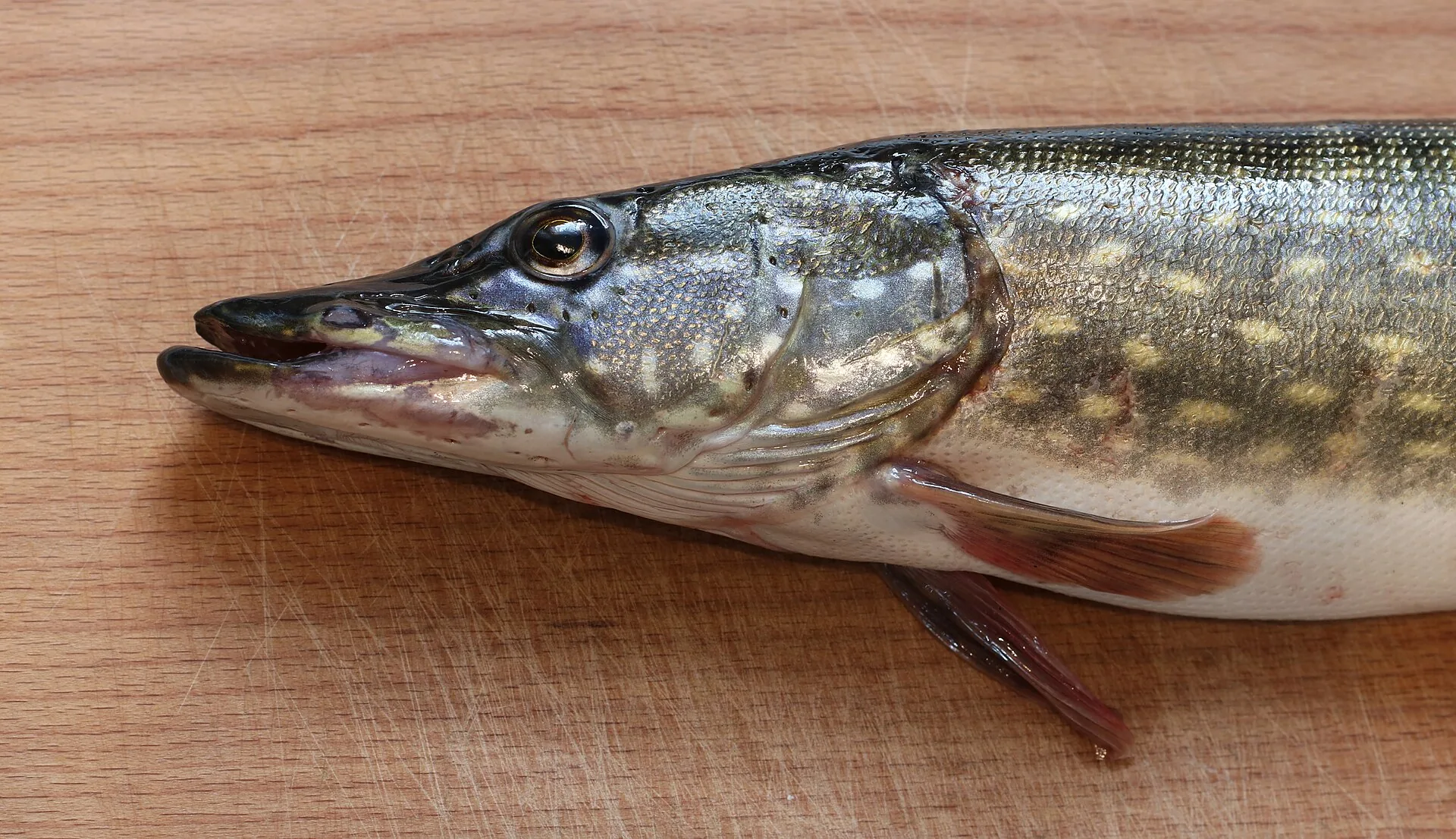
A big pike does not chase your lure across open water. It sits still, tucked against an edge, and waits for one wrong move from a roach or a perch. Then it goes from zero to gone in a tenth of a second. Understand that one fact, that pike are lazy, structure-bound ambush predators, and you have already solved most of the puzzle. The rest is knowing which edge to cast at, and what makes the fish commit instead of just following.
Where pike actually sit
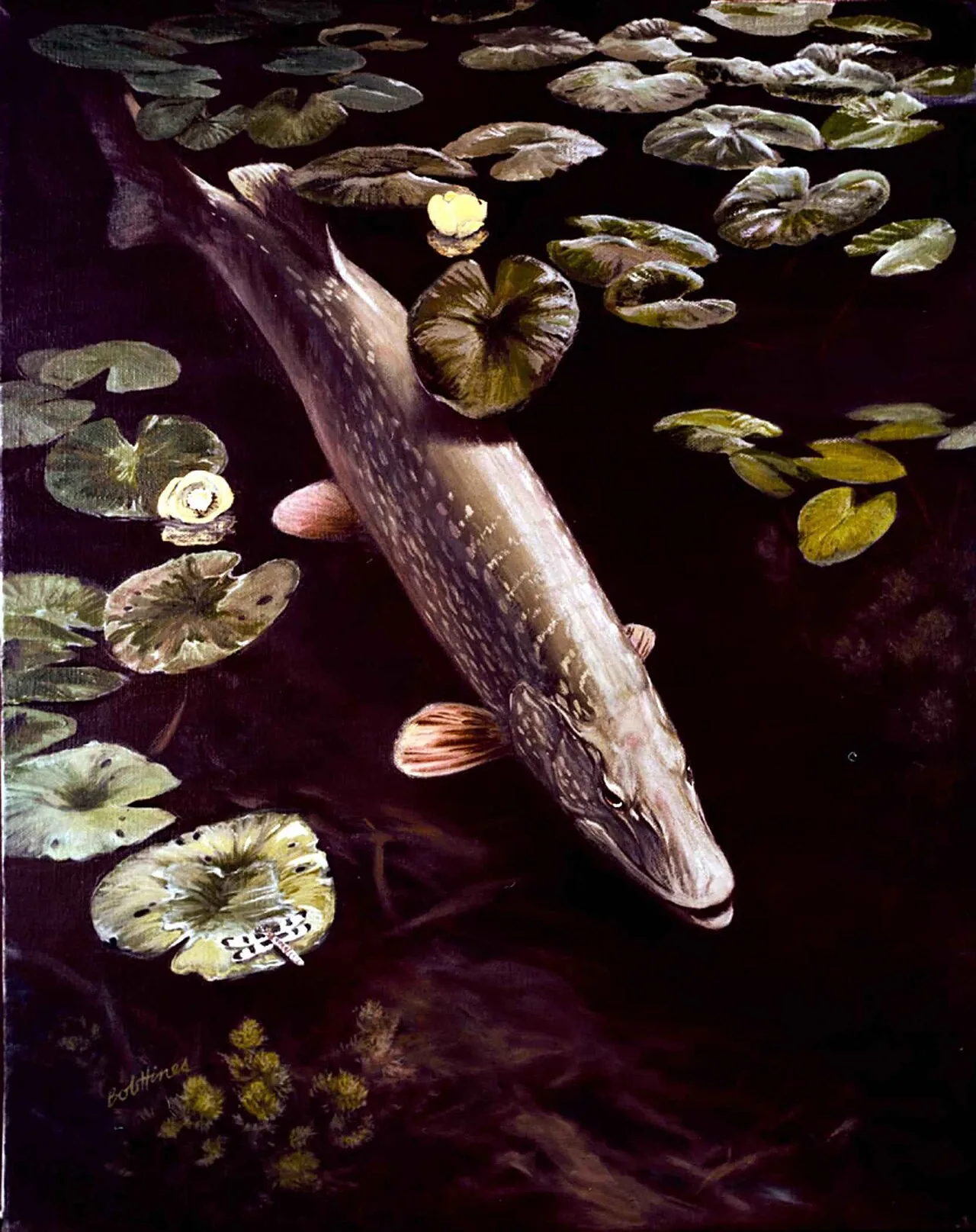
Pike relate to cover and to the baitfish that cover holds. They want a place to hide where prey will swim past within a short lunge. So you fish edges, not open water.
The classic spots: the outside edge of a weed bed, where green cabbage meets clean bottom. Drop-offs where a shallow flat falls away into the first deep water. Points and sunken islands. Reed lines and bulrushes. Bridge pilings, boat docks, fallen trees, any hard vertical structure in otherwise featureless water. On rivers, forget the main flow. Pike sit in the slack water behind an obstruction or right on the crease where fast current meets slow, letting the river deliver food while they barely move a fin.
The single most reliable concept is the first deep water next to a shallow feeding flat. Pike push up shallow to hunt, then drop back to that nearby depth to rest and digest. Find that transition and you have found a spot that produces all year. And always, follow the bait. No baitfish, no pike, no matter how perfect the structure looks.
How it shifts through the year
Pike spawn early, when the water hits the mid-40s Fahrenheit (around 7 to 9 C), in the shallowest, darkest-bottomed bays that warm first. After they spawn out, as water climbs through 50 to 55 F (10 to 13 C), they feed hard to recover. This post-spawn window is some of the easiest big-pike fishing of the year, and the fish can be sitting in water 1 to 5 feet deep.
As the water warms into the 55 to 65 F range (13 to 18 C), pike pull out of the warming shallows and set up on the big weed beds and their edges. Once it pushes past 65 F and certainly above 70 F (21 C), the bigger fish get uncomfortable in the warm shallows. They go deeper, hold near cooler water, and shadow schools of perch, ciscoes, or whatever pelagic baitfish the lake has. Summer pike are often a low-light, early-and-late game, or a deeper game.
Autumn is the one to circle on the calendar. As the water cools, pike move shallow again and feed heavily before winter, fattening up. They stack on the remaining green weed, on rocky windswept points, and at the mouths of the bays where they spawned. Cold and a bit of chop in October and November is prime time for the fish of the season.
What triggers a strike
A pike strikes for two reasons: it is hungry, or it is provoked. You want to give it both.
Speed and a sudden change are your main triggers. Reel a lure along at a steady clip, then kill it for a second, or rip it sideways, and that stutter often draws the hit. The lure looking briefly injured or panicked is what flips the switch. Vary your retrieve speed and work different depths on every cast until a fish shows you what it wants that day.
Light and weather matter more than most beginners think. A flat, bright, calm bluebird day is the hardest pike fishing there is. Low light and a bit of wind are far better. Overcast skies, dawn, dusk, and a ripple on the surface all push pike to feed and make them less spooky. If you only get one window, take the grey, breezy one over the sunny one.
The lures that actually work
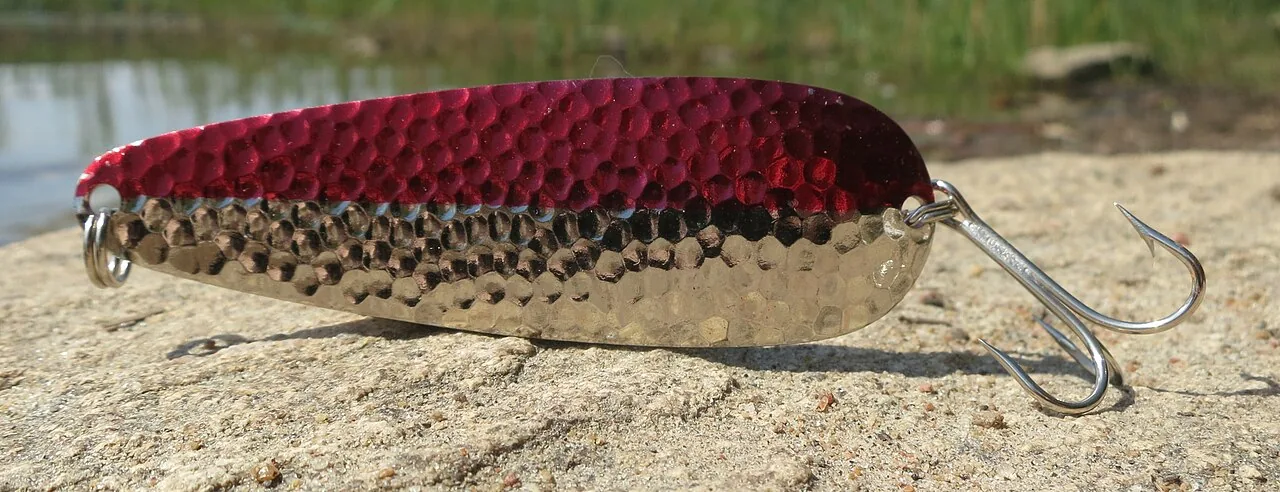
You do not need a tackle box with a hundred lures. You need a handful, fished with conviction.
Big flashy spoons are the place to start. An Eppinger Dardevle in the 7cm to 12cm range (the classic red-and-white is a fish-catcher for a reason) wobbles, flashes, and casts a mile. Pike have eaten spoons for a century. Inline bucktail spinners and spinnerbaits are next, thumping out vibration that pike feel on their lateral line before they ever see the lure, which makes them deadly in coloured water. Then soft swimbaits and shads, a 12cm to 15cm paddle tail on a jig head, fished on a straight, steady retrieve. In-Fisherman's pike guys will tell you a solid soft swimmer on a jig is about the most consistent lure going, in clear water and dirty. Jerkbaits round it out for when fish want an erratic, darting bait you can twitch and pause.
Size up. Pike eat big meals, and a bigger lure often sorts out the better fish without scaring off the smaller ones. A 6-inch soft bait is not too big for an average pike.
Colour comes down to water clarity. In stained or coloured water, go bright and high-contrast: chartreuse, firetiger, orange. In clear water, especially on pressured fish that have seen plenty of lures, go natural: perch, roach, silver, white. When a big fish follows without committing, downsizing or switching to a more realistic, subtler bait is often what converts it.
The figure-eight, and cold-water fish
Here is the trick almost no beginner uses, and it puts pike in the net. When you retrieve a lure right to your feet or to the boat, do not lift it out. A pike will often follow a lure all the way in without striking. The instant the lure reaches you, sink your rod tip and sweep the lure in a big, wide figure-eight through the water, keeping it moving, with long smooth turns. Followers commit on the turn constantly. Make it a habit on every single cast. It feels silly until the day a giant materializes out of nowhere and eats at your feet.
When the water gets genuinely cold, in late autumn through winter, pike slow right down and a fast lure can be ignored. This is when dead bait earns its keep. Suspend a frozen smelt, herring, or mackerel, or a sardine, under a float over a weed edge or a drop-off, and let the smell do the work. A medium to large live sucker where it is legal does the same job. Fish it slow and patient, a foot or two off the bottom, and watch the float.
Gear and handling beginners get wrong
This part is not optional, so read it twice.
A wire or heavy fluorocarbon trace is non-negotiable. Pike have a mouth full of backward-slanting teeth that will shear straight through mono or braid in one shake, and you lose the fish with a lure stuck in its jaw. Run 30 to 50 lb braid as your mainline, then a wire trace or a heavy fluoro leader of around 40cm (15 inches) to the lure. No trace, no pike fishing. It is that simple.
Handling is where good intentions kill fish, so get it right. Before you cast, have a few things ready: a big landing net, an unhooking mat, long forceps, and wire cutters. Land the fish, lay it on the wet mat, and work fast. To open the mouth, slide your fingers in under the gill cover from the side opposite the hooks, find the bony arch, and grip there. That is the chin grip done correctly, and it keeps your hand clear of both the teeth and the delicate red gills. Pin the hooks out with the long forceps.
Support the fish horizontally, always. Never, ever hold a pike vertically by the jaw with the body dangling. That wrecks the spine and the organs, and you will release a dead fish that swims off and dies later. Cradle the body with your other hand, keep it over the mat, get your photo quickly, and slip it back. Hold it upright in the water until it kicks off under its own power. A pike out of water for thirty seconds is fine. A pike held badly for three minutes is not.
A simple plan for your next session
Pick a grey, breezy day over a sunny calm one. Find an edge: a weed line, a drop-off, a point, a bridge. Start with a 10cm spoon or a 13cm soft swimbait on a wire trace, fish it with changes of speed, and finish every retrieve with a figure-eight. Cool water means go faster and flashier; cold water means slow down or hang a dead bait under a float. Bring the mat and the forceps before you bring anything else.
Pike live right across Sweden and through the northern United States, almost certainly closer to you than you think. If you want to see where they are likely biting near you right now, with live weather and a clear, no-nonsense read on the conditions, you can check napp.fish. It is free, and there is no login.
Photos: SpinfisherCRO, CC BY-SA 4.0 · Hines Robert W, U.S. Fish and Wildlife Service, Public domain · R. Henrik Nilsson, CC BY 4.0