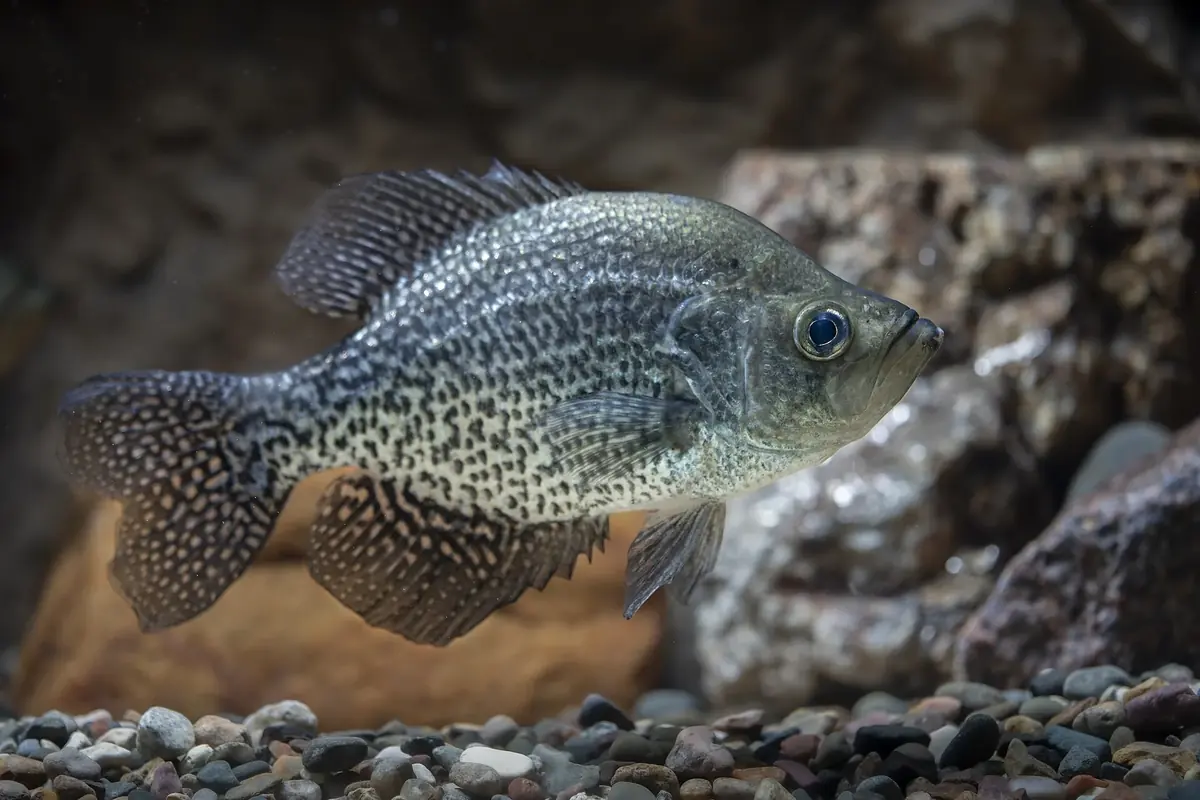
Catch and release done right, so the fish survives
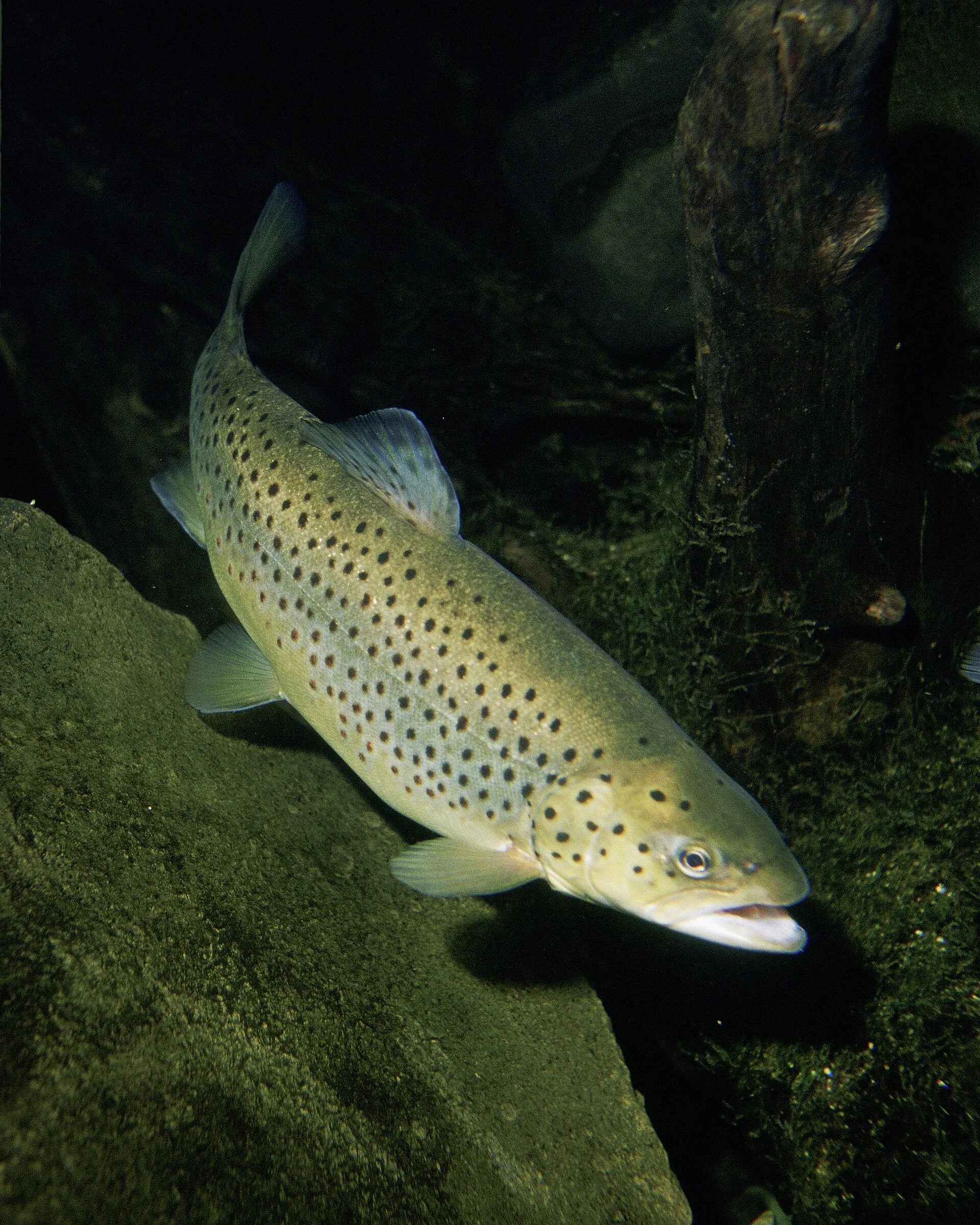
A trout swims off strong, you feel good about letting it go, and four hours later it is belly-up under a log. That fish was already dead when it left your hand. It just had not finished dying yet. Most of the harm in catch and release happens in the last thirty seconds before release, and almost all of it is avoidable. None of this is about being precious with fish. It is about the difference between a fish that recovers and one that you killed without meaning to.
Land it fast, not to the bone
A long, drawn-out fight feels like the sporting part. For the fish it is the most dangerous part. A fish playing for its life burns through oxygen and floods its muscles with lactic acid, and a fully exhausted fish recovers badly even after it swims out of your hands. NOAA's guidance is blunt: never fight a fish to exhaustion. Use a rod and line heavy enough to actually beat the fish you are targeting, then get it in. Light tackle is fun right up until it leaves a worn-out fish floating.
This matters more the warmer the water gets. Warm water holds less oxygen, and a tired fish in warm water is a fish with no margin left.
Crush the barb before you cast
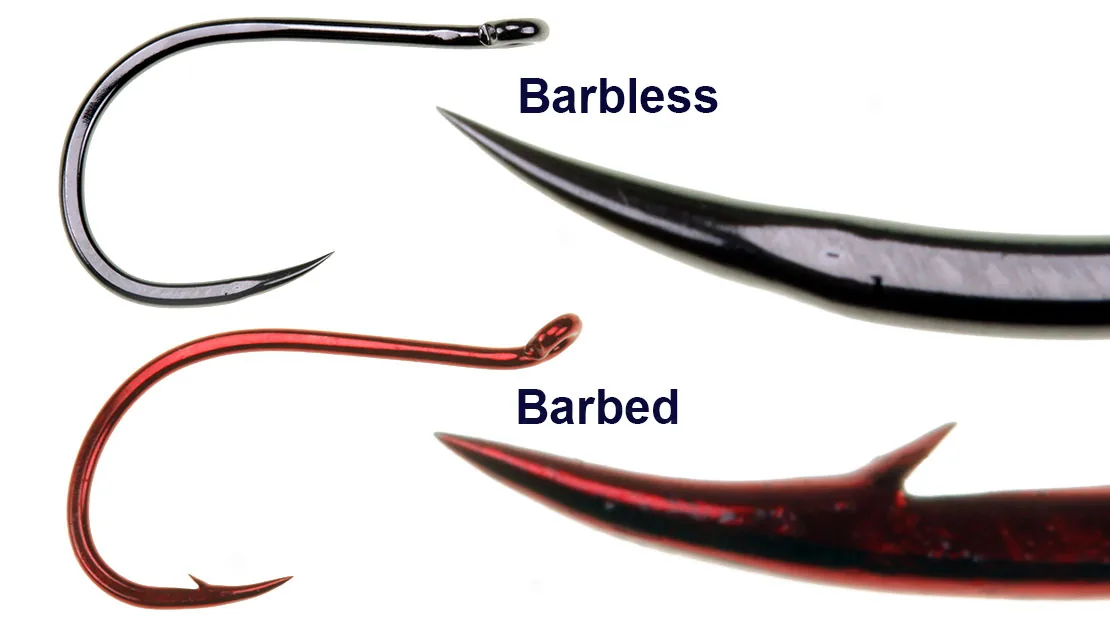
A barbless hook, or a barb you have pinched flat with pliers, comes out in a second. That is the whole point. The faster the hook is out, the less you handle the fish and the less time it spends out of the water. Barbless hooks also do far less tearing on the way out, and they make a deep hook easier to back out cleanly.
You will drop a few more fish on the way in. You will lose almost none at the net. It is a trade most people make once and never think about again. Non-stainless hooks help too: if you do leave one in a fish, a plain steel hook rusts out over time where a stainless one will not.
Wet hands, wet net, every time
A fish is covered in a slime coat. That layer is its skin and its immune system, the barrier that keeps infection and fungus out. Dry hands, a dry rag, a dry deck, or a dry knotted net wipe that slime off in patches, and every bare patch is an open door for disease days after release.
So wet your hands before you touch it. Wet the net, wet the mat, wet whatever the fish lands on. If you would not rub sandpaper on it, do not let it touch anything dry. And use a knotless rubber or rubber-coated net, never coarse nylon mesh, which scrapes slime, splits fins, and tangles hooks.
Keep it in the water, count the seconds
Air exposure is the one most people underrate. A fish cannot breathe in your hands. The clock starts the moment it clears the surface.
NOAA calls under 60 seconds ideal. Fisheries scientists who study this go further: a widely used synthesis lands on roughly 10 seconds as the target, because the damage climbs steadily the longer a fish is held out. Reproductive studies have found fish held in air more than 10 seconds had noticeably lower spawning success than fish kept under that.
Easiest trick on the water: unhook the fish in the net, in the water, and only lift it if you actually want a photo. When you do lift it, hold your own breath as you raise it and put it back the instant you need to breathe. If you are gasping, so is the fish. Get the camera set and the shot framed before the fish ever comes up, so the lift is a few seconds, not a fumbling half a minute.
Hold it like it matters
How you hold a fish can injure it even if you do everything else right.
Never hold a fish by the gills or the eyes. Gills are exposed blood-rich tissue, basically lungs, and a finger in there does damage you cannot see and the fish will not recover from. Support it horizontally instead: one hand under the belly, one near the tail, weight spread along the body.
Never hang a big fish straight up and down by its jaw. A bass or pike held vertically has its whole body weight pulling on its spine, jaw, and organs, which are built to be held up by water, not by a lip grip in mid-air. Keep it level and cradled, and keep it low, over the water or the net, so a flip or a drop ends in water instead of on rock or the floor of a boat.
When it is hooked deep, cut the line
Sometimes a fish takes it all the way down and the hook is somewhere you cannot reach without digging. Do not dig. Cut the line as close to the hook as you can and let the fish go with the hook in.
It feels wrong to leave a hook in a fish. The numbers say otherwise. A fish left with a hook in often has a very low mortality, in some studies only a few percent, while prying at a deep hook tears gills and gut and kills a far larger share. A hooked fish that swims off has a real chance. A fish you have rummaged inside usually does not. Leave it.
Revive it before you let go
If the fish is tired and does not bolt off when you open your hands, do not just drop it and hope. Hold it upright, facing into gentle current, so clean water runs over its gills the right way. No current, in a lake or off a boat, move it slowly forward to push water through. Give it as long as it needs. When it kicks hard and pulls out of your grip on its own, it is ready. If it rolls or floats, it is not, and it needs more time.
When the water is warm, do less or do nothing
Heat changes all of this. Fisheries managers call water temperature the master factor for a reason: it drives everything about how a fish copes. As water climbs into the high 60s Fahrenheit (around 20 C) for trout, the same fight, the same air, the same handling that a fish shrugs off in spring can kill it. Studies pushing handling and heat together have measured 50 to 80 percent delayed deaths in the warmest water. That is why agencies put "hoot owl" closures and temperature limits on rivers in summer.
So carry a cheap stream thermometer. When it reads warm, fish early when it is coolest, handle even faster, skip the photo, or just leave them alone until things cool off. A fish you do not catch on a 75 degree afternoon is one that is still there in fall.
The short version
Beat the fish quickly, pinch your barbs, wet everything that touches it, keep air exposure to a few seconds, support it level and never by the gills or hung by the jaw, cut the line on a deep hook, and revive it until it swims off on its own. Back off hard when the water is warm. None of it costs you anything except a little attention, and the fish you let go right is the fish someone catches next season.
napp's rankings are there to help you find fish and read the conditions, but the fish biting today are only here next time if we put them back in good shape, so check your local rules and seasons too. Find a spot near you and see what is biting, free and no login, at napp.fish.
Photos: Eric Engbretson for U.S. Fish and Wildlife Service, Public domain · Mark Bachmann, Copyrighted free use · Jebulon, CC0